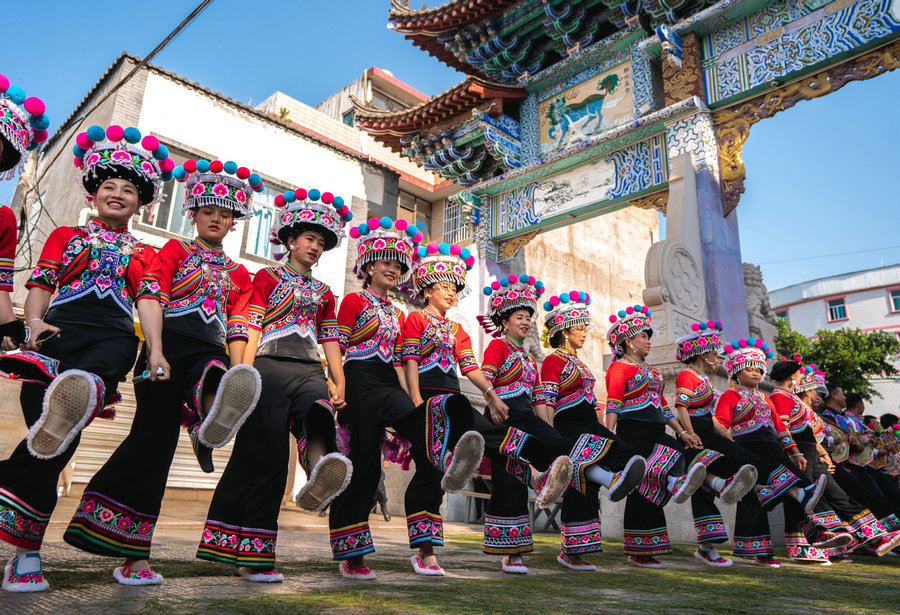
Traditional New Year of Yi Ethnic Group
Introduction
Yi traditional New Year is a vibrant and culturally rich festival celebrated by the Yi ethnic group, primarily in the Liangshan Yi autonomous prefecture of Sichuan province, as well as in other Yi-populated areas across Yunnan, Guizhou and Guangxi. It was recognized as a national intangible cultural heritage in 2011, underscoring its role in preserving the historical and cultural fabric of the Yi community.
Held annually around November 20, the festival combines ancestral worship, recreational activities, culinary traditions and unique clothing customs. Yi New Year is both a ceremonial and celebratory event, embodying the values and heritage of the Yi people while showcasing their connection to nature, family and community.
History
The origins of Yi New Year trace back to the ancient sacrificial rituals of the Yi ancestors. Historical records suggest that the festival's earliest documentation dates to the Tang Dynasty (618-907), making it a living testament to the Yi people’s enduring cultural traditions.
As a ritual rooted in ancestor worship, Yi New Year exemplifies the Yi's reverence for their forebears and their gratitude for blessings such as abundant harvests, thriving livestock and familial harmony. Over the centuries, these customs have evolved into a multifaceted celebration that reflects the Yi’s historical journey and their deeply spiritual worldview.
Features
Yi New Year is characterized by an array of traditional practices that offer insights into the Yi people's cultural richness and societal norms.
Key elements of the festival include:
Ancestral Worship: Ceremonial offerings are made to honor ancestors, seeking their blessings for prosperity and well-being.
Recreational Activities: Traditional Yi sports and games, such as wrestling and archery, are performed, emphasizing physical strength and communal spirit.
Culinary Customs: Special dishes, often incorporating locally sourced ingredients, are prepared and shared among families, symbolizing unity and abundance.
Attire and Dance: Participants wear intricate traditional costumes, adorned with symbolic patterns and vibrant colors, and engage in lively dances accompanied by folk music.
These customs not only reinforce community bonds but also serve as a living repository of Yi history, aesthetics and moral values.
Cultural Significance
Yi New Year holds profound cultural and social importance. It encapsulates key Yi philosophical ideals such as respect for elders, love for the young, and harmonious coexistence with nature. By celebrating agricultural abundance and familial unity, the festival fosters a sense of identity and pride among the Yi people. Additionally, the event offers a unique opportunity for cultural exchange, drawing attention to the diversity and vitality of China's ethnic heritage.
For scholars in fields such as anthropology, folklore and sociology, Yi New Year provides a wealth of material for studying the Yi's social structures, religious beliefs and artistic expressions.
Preservation
In recent years, efforts have been made to preserve and promote Yi New Year as a vital part of China's intangible cultural heritage. Government initiatives and cultural organizations have worked to document the festival's customs, ensuring their transmission to future generations. Educational programs and tourism initiatives have further highlighted the significance of the festival, providing platforms for both the Yi people and the broader public to engage with and appreciate its traditions.








